

Biography
- About Derek Welton
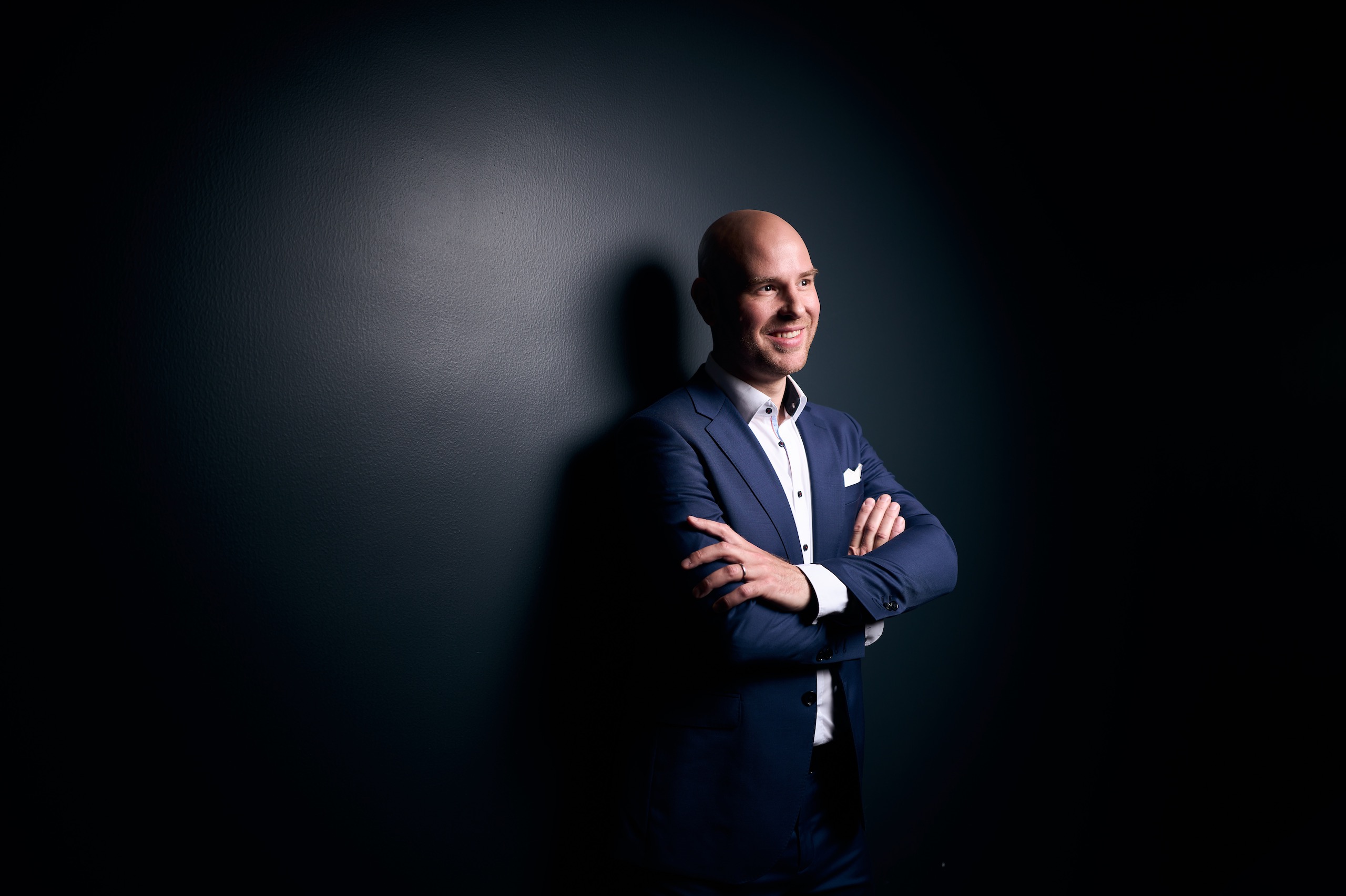
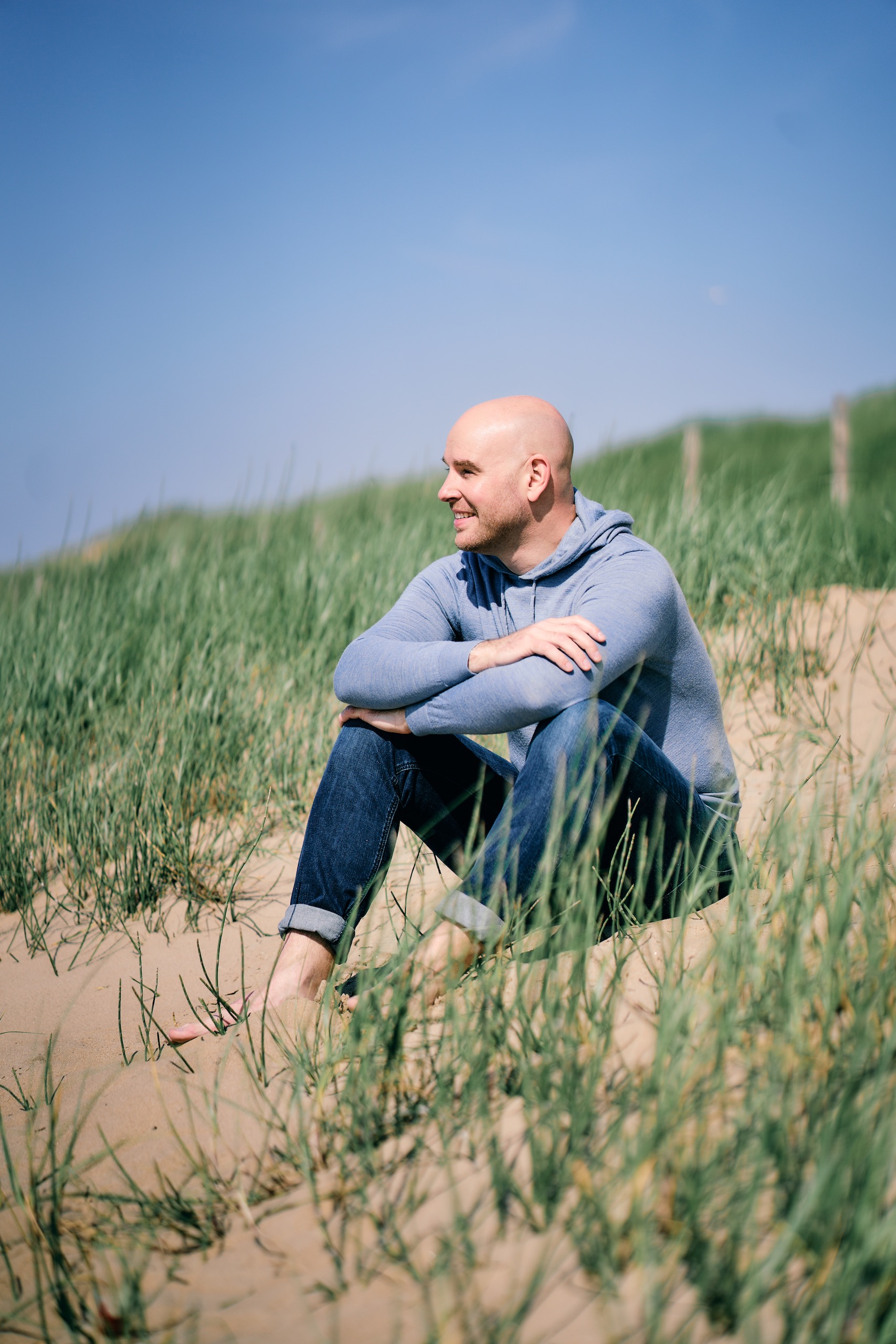
The Australian-born bass-baritone Derek Welton is recognised as one of the leading voices of his generation, with a repertoire ranging from Bach and Handel to the present day.
Welton’s engagements for the 2025/2026 season will include his role and house début as King Heinrich in Lohengrin at the Hungarian State Opera, his return to the Deutsche Oper Berlin in the title role of The Flying Dutchman, his role début as John Claggart in Billy Budd at the Opéra de Lyon, his début at the Opernhaus Zürich in the role of Pizarro in Fidelio and his début at Müpa Budapest in the role of Wanderer in Siegfried. Concert appearances will include the title role of The Epic of Gilgamesh at the Dvořák Prague Festival, Mahler’s Symphony No 8 with the Philharmonia Orchestra and a concert of Bach at the Grafenegg Festival, as well as Wanderer at the Lucerne Festival and King Marke in Tristan und Isolde in concert with the Houston Symphony Orchestra.
Calendar
Upcoming performances
- 1 4 10
- April 2025
- 12
- September 2025
- Concerto Köln | Dresdner Musikfestspiele
Siegfried
- Richard Wagner
Conductor · Kent Nagano
Siegfried · Thomas Blondelle
Mime · Christian Elsner, Thomas Ebenstein
Wanderer · Derek Welton
Alberich · Daniel Schmutzhard
Fafner · Hanno Müller-Brachmann
Erda · Gerhild Romberger, Ulrike Schneider
Brünnhilde · Åsa Jäger
Woodbird · Soloist of the Tölzer Knabenchor
Locations
State Opera, Prague, Czechia
- 20
- September 2025
- Dvořák Prague Festival
The Epic of Gilgamesh
Piano concerto in A minor · Op 7
Clara Schumann
Cello concerto in A minor · Op 129
Robert Schumann
The Epic of Gilgamesh · H 351
Bohuslav Martinů
Conductor · Robert Kružík
Piano · Onutė Gražinytė
Cello · Steven Isserlis
Soprano · Lucy Crowe
Tenor · Kyle van Schoonhoven
Bass-baritone · Derek Welton
Bass · Jan Martiník
Prague Philharmonia
Prague Philharmonic Choir
News
Press and updates
Welton finishes 2024/2025 season with another jump-in
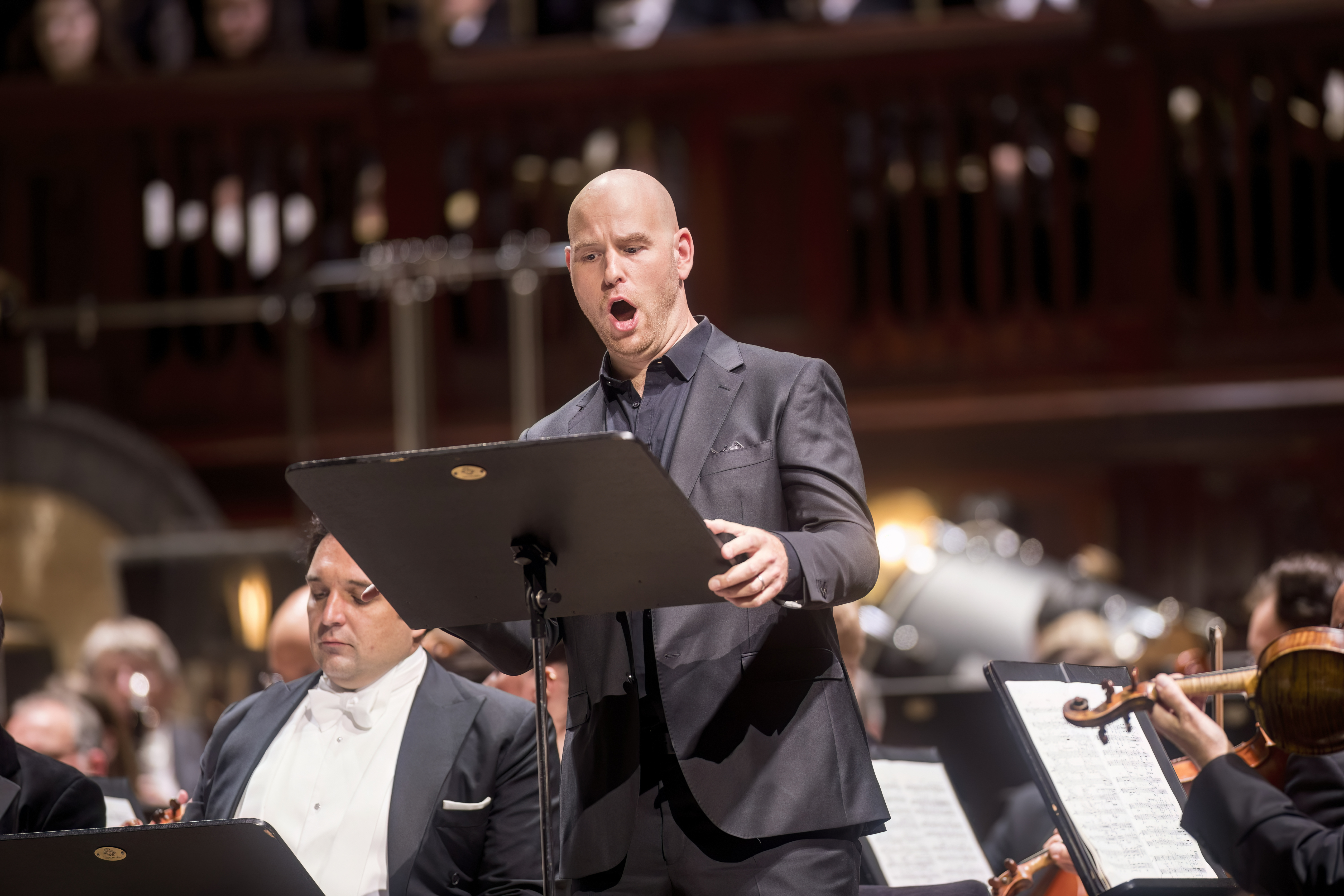
After a return to Berlin for The Flying Dutchman on 21 April, Derek Welton sang the Pater Profundus in a semi-staged performance on 26 April of Mahler’s Symphony No 8 with the London Philharmonic Orchestra at the Royal Festival Hall, in which he was described as ‘the confident bass’ (Financial Times), and returned to the […]
Successful Wanderer début in Prague and Paris
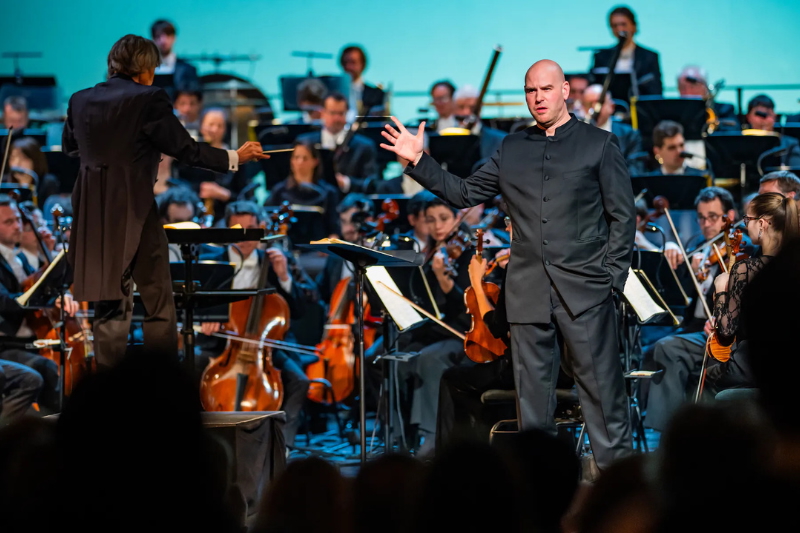
Derek Welton made his début as the Wanderer in Siegfried in April 2025, completing the trio of Wotans in Das Rheingold, Die Walküre and Siegfried. The début took place at the State Opera in Prague on 1 April, quickly followed by the second performance on 4 April in the Philharmonie de Paris. A further […]
Welton praised for short-notice Wotan at the Paris Opera
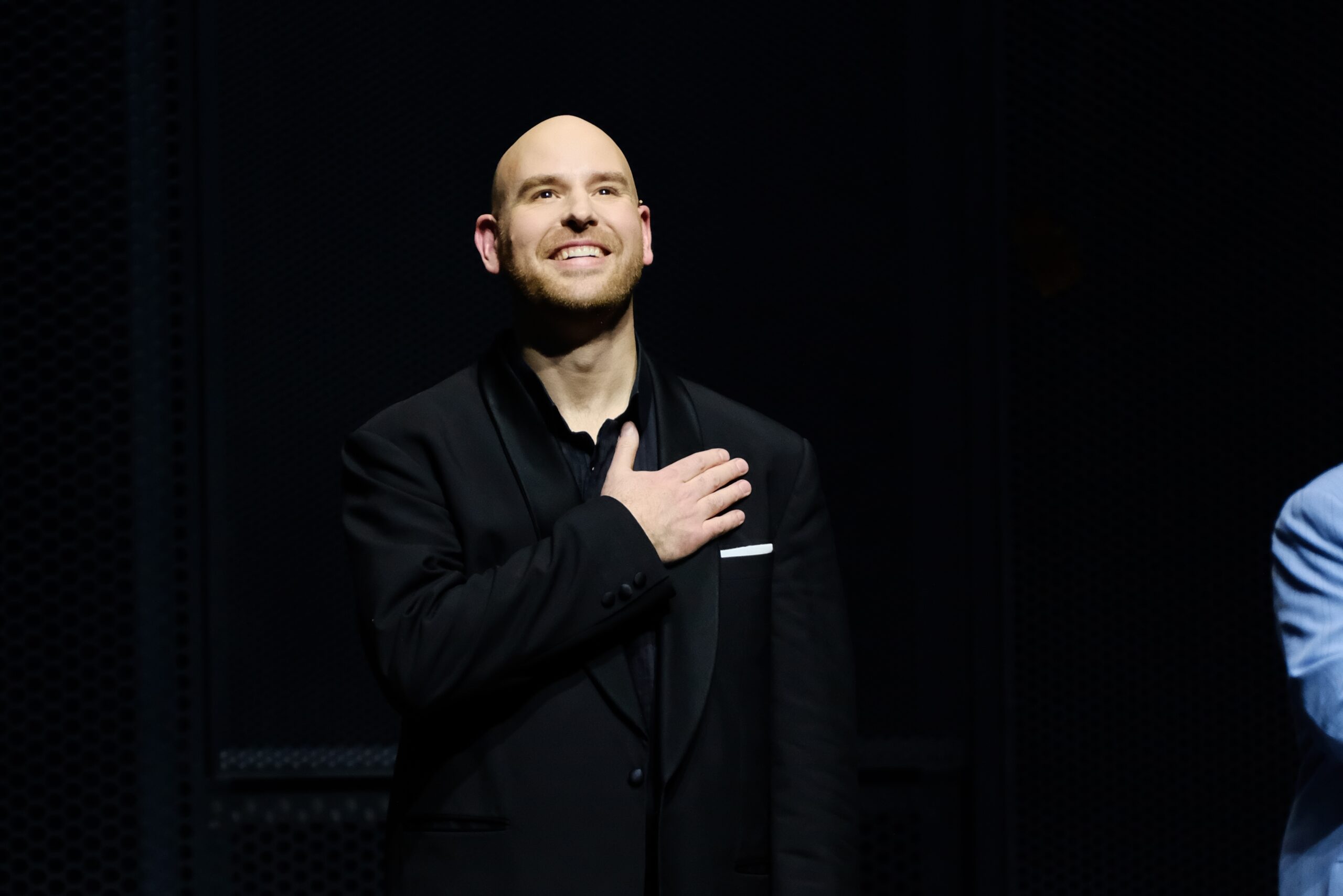
Derek Welton took over the role of Wotan in Das Rheingold for an ill colleague at short notice on 19 February at the Paris Opera, receiving praise from the public and press for his musical and dramatic portrayal of the role. Forum Opéra described Derek as a ‘rightly acclaimed Wotan’: ‘And miracle: the sun […]
Successful début in Washington
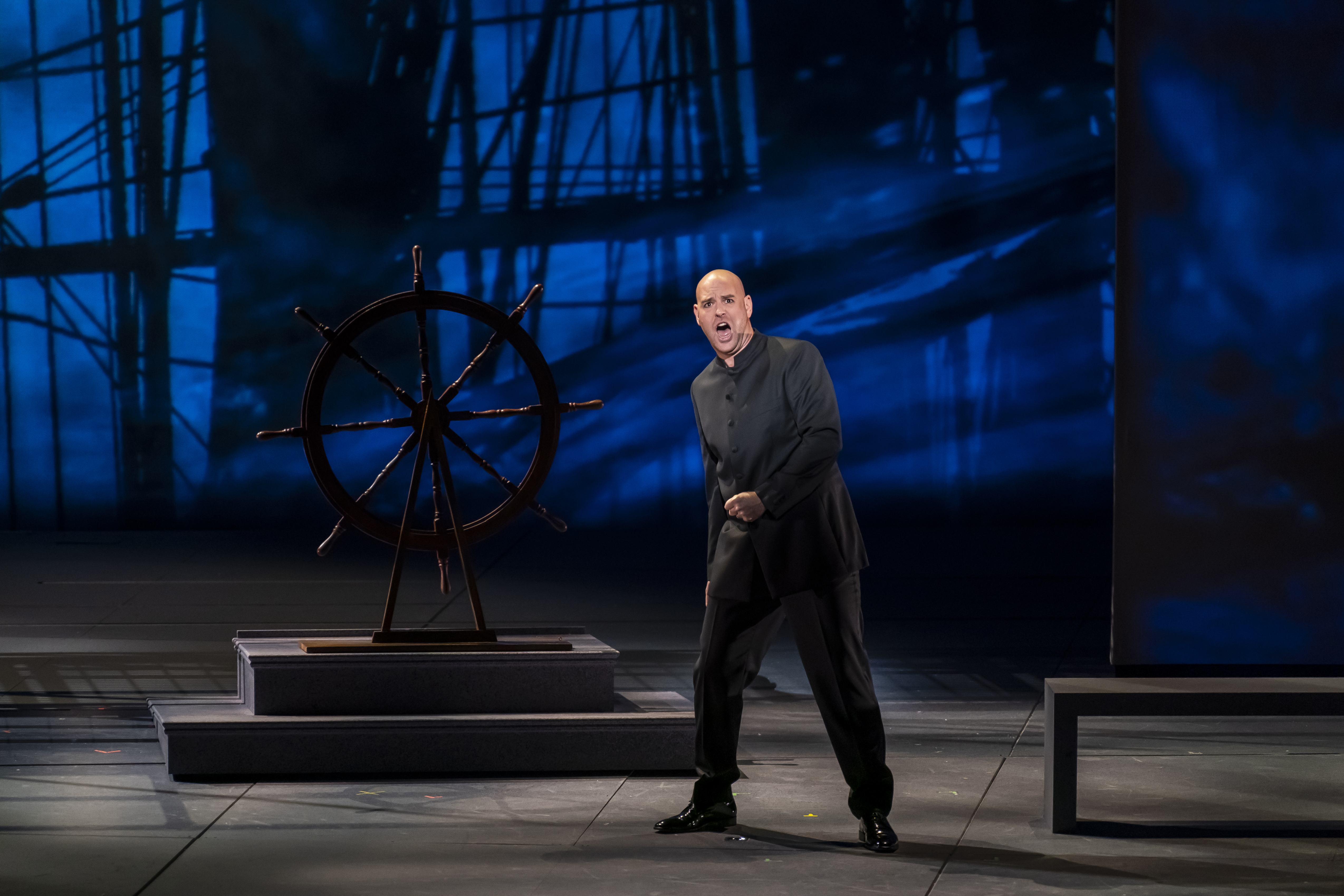
Derek Welton recently made successful role and house débuts as Pizarro in Fidelio at the Washington National Opera, in a production directed by Francesca Zambello and conducted by Robert Spano, which had its premiere on 25 October. The following evening, Derek starred in Washington National Opera’s Gods & Mortals concert, featuring excerpts of Wagner’s Ring […]
Audio and video
Featured recording
© Charlie Kinross

‘The bass of Derek Welton brought a depth and sonority to “Qui tollis” and his phrasing was meticulous.’
- Opera Today
‘Welton’s bass-baritone delivered clarity and resonance … He gave full voice to the part’s more declamatory passages, most notably in a wonderfully bronzed Qui tollis peccata mundi.’
- Seen and Heard International
’Especially Derek Welton as Amfortas made [a] powerful impression, not least for [his] detailed attention to textual nuances in [his] vocal delivery.‘
- Opera
‘Derek Welton’s Wotan is a mighty force’
- The Times
‘Welton’s dark bass answered as Pater Profundus, a stark timbre reflecting dramatic text’
- The West Australian
‘Derek Welton stars as an Amfortas full of nuances, impeccable in his declamatory phrasing.’
- ABC
‘Derek Welton delights as Amfortas with his lyrically grounded bass-baritone, singing every phrase cleanly and making the torment of this man absolutely palpable.’
- Online Musik Magazin
‘The Australian baritone Derek Welton’s Amfortas showed security in register, attention to detail, a homogeneous tone and a remarkable declamation without falling into affectation.’
- Platea Magazine
‘Derek Welton sang Amfortas with equal confidence. His powerful baritone handled the extremely difficult part clearly, cleanly and with extremely clearly understandable diction.’
- Klassik begeistert
‘Derek Welton was totally praiseworthy in his portrayal of Wotan, ever moving, and singing fully with emotion.’
- OperaWire
‘Derek Welton was a youthful Wotan, full of virile energy and using the full range of his voice to add meaning to the text, unafraid of descending almost to a whisper, highly effective and moving.’
- Opera
‘Welton is superbly commanding as a distinguished-looking but troubled and disturbing, violently inclined Wotan’.
- Limelight Magazine
‘Derek Welton sang the father of the gods himself with equal confidence. His powerful baritone voice handled the extremely difficult part with ease, cleanly and with extremely clearly understandable diction.’
- Klassik begeistert
‘Derek Welton, very distinguished in his role, is the ideal Wotan of the moment and will be for a long time to come.
- Mundo Clasico
’The Australian Derek Welton, already experienced in Bayreuth, is a simply sensational Amfortas’.
- Kronen Zeitung
‘Derek Welton is at home in the Wagner world and is a welcome guest in the great bass-baritone roles at all major houses. Hearing him live as Wotan for the first time today is absolutely thrilling. His voice sounds intoxicatingly beautiful in all registers. It seems to know no boundaries.
In his stage play, Wotan’s inner conflicts become apparent: His excessive anger seems deceptively real. What is even more impressive, however, is to hear how his heart softens through Brünnhilde’s speech, to feel how much he punishes himself by punishing Brünnhilde. Sung by Welton, the final aria is the most touching of Lied-singing in the greatest of opera.’
- Klassik begeistert
‘Derek Welton stands out among the top-class cast as Wotan with his voluminous and attractive bass-baritone. His facial expressions and body language emphasise his feelings.’
- Das Opernmagazin
‘Derek Welton is a Wotan dazzling with power and presence.’
- Forum Opéra
‘Derek Welton is unsurpassable as Wotan.’
- Kölner Stadtanzeiger
‘Frustration, authority, love, ego: there is no side of Wotan that bass-baritone Derek Welton does not portray wonderfully.’
- De Volkskrant
‘Derek Welton was a pleasantly human Wotan, whose fury was even able to strike fear into the heart of his fearlessly free favourite daughter, Brünnhilde, along with all the other Valkyries. His powerful timbre impressed with its utmost sophistication and never became brittle, even in the angriest finale.’
- Neue Musikzeitung
‘The sought-after Wagnerian bass-baritone Derek Welton gave a stirring performance. He supported his amazing singing lines with a charismatic acting performance in expression and gesticulation, for which he received a proper ovation. One could almost say that he created the prototype of an angry, but also a remorseful ruler. He almost overshadowed everyone on stage.’
- Aktuálně
‘Derek Welton became Lord and King of Valhalla yesterday. His impressive performance contained everything we could have wished for: he portrayed Wotan as a ruler, father and man both strong and failing. His vocal confidence as well as his perfect portrayal of the role were a great experience for the audience, who saw an operatic character created in astonishing vocal and interpretational flexibility.’
- Opera Plus
‘The splendid hero turns out to be Derek Welton. The Australian baritone dominates the overwhelming title role and infuses it with all the colours of the Lieder singer that he also is.’
- Classique News
‘The baritone Derek Welton was the great star in this staged version of Mendelssohn’s oratorio Elijah. His presence, his projection, the intensity of his acting, allowed him to embody an ideal prophet, an angry man, permanently questioning: fulminant in this shadowy oratorio.’
- Classica
‘Derek Welton, a head taller than the rest of the cast, is imposing in the title role. Beyond his stature, his voice of bronze and his energy naturally place him in the footsteps of this “charismatic leader” with inspired phrasing. His timbre has the breadth and darkness of ancient oak, while his concentrated projection has the vitality of youth.’
- Ôlyrix
‘It takes an exceptional artist to portray Elijah. At the Opéra de Lyon, it is the Australian baritone Derek Welton who plays the Prophet brilliantly. Here he confirms a very impressive talent as a singer-actor, portraying a charismatic character: a very tall figure with a powerful voice, a timbre which is simultaneously sonorous and creamy, a superlative technique allowing him to dare flamboyant top notes as well as sustained low notes, nuances and colours, and to be authoritarian and angry in “Rufet lauter” as well as desperate and pleading in “Es ist genug”. He dominates the stage in accordance with his role, always in counterpoint to the rest of the soloists and the choir.’
- cult.news
‘Derek Welton remarkably portrays a varied Elijah, trusting in God but sometimes agitated by doubts (his long monologue “Es ist genug” is a marvel of variety and emotion).’
- Díapason
‘THE voice of the evening is Derek Welton. The Australian bass-baritone gives a heart-rending portrayal of Amfortas. The incredible presence of his timbre, carrying right up to the side of the listener, so to speak, invests a compassion, indeed a participation, that refers directly to Parsifal’s sudden calling. The splendour of his colour and his inexhaustible legato make the King the main character, met with a natural nobility even in his moments of rebellion and despair’.
- Anaclase
‘Derek Welton demonstrates great class as Amfortas: a deathly ill king with a wonderfully healthy voice.’
- BR Klassik
‘The beautiful bass-baritone of Derek Welton (Orest) was a calling card to every Australian opera company and orchestra to invite him home again, and often.’
- Limelight Magazine
‘This prodigiously gifted young singer clearly is on the way to becoming a major international star.’
- MusicOMH
‘Towering performances came from … Derek Welton who, as Wotan, dominated the drama not only vocally but also physically’
- Opera
‘Above all the magnificent Wotan of Derek Welton’
- Die Zeit
‘The best of the bunch was Derek Welton’s Wotan. The Australian bass-baritone sang the young god with fresh vigor and vitality. His gently powerful and darkly lacquered voice tempered nobility with arrogance.’
- Opera News
‘Derek Welton was in insolently gorgeous voice as Wotan, taking the long phrase “In des Morgens Scheine mutig erschimmernd lag sie herrenlos” in one breath, and relishing the high tessitura throughout.’
- Opera
‘The vocal sensation of this performance was Derek Welton as Orest with his powerful, distinctive bass-baritone.’
- News
‘Orest was outstandingly cast with the magnificent bass-baritone voice of Derek Welton’
- Das Opernglas
‘The youthful Derek Welton, whose full bass-baritone flowed effortlessly, is sure to become a prominent Wotan’
- Die Welt
‘Perhaps the greatest revelation was Derek Welton’s dark, resonant singing and powerful physical presence as Klingsor. Clearly this young, British-trained Australian is destined for a big Wagnerian career.’
- Opera
‘Derek Welton showed he is the possessor of a major voice—a bass-baritone of easy power and robust, pleasing timbre’
- Opera
‘Derek Welton’s Christ was particularly outstanding, as was his singing of the two final bass arias in Part Two: time stood still for Komm, süßes Kreuz.’
- Seen & Heard International
‘The undoubted high points were Derek Welton’s glorious baritone, culminating in a powerful yet seemingly effortless “The trumpet shall sound”…’
- BachTrack
‘When Welton thundered ‘I will shake the heavens and the earth’, he did pretty much that: every aria he sang had an easy, unforced majesty.’
- The Independent
‘One of those performers you can’t take your eyes off when he is onstage.’
- Spectator
‘A true Handelian bass, a singer with everything needed for this music’
- Classical Source